FKH1 / YIL131C Overview
- Standard Name
- FKH1 1
- Systematic Name
- YIL131C
- SGD ID
- SGD:S000001393
- Feature Type
- ORF , Verified
- Description
- Forkhead family transcription factor; rate-limiting replication origin activator; evolutionarily conserved lifespan regulator; binds multiple chromosomal elements with distinct specificities, cell cycle dynamics; regulates transcription elongation, chromatin silencing at mating loci, expression of G2/M phase genes; facilitates clustering, activation of early-firing replication origins; binds HML recombination enhancer, regulates donor preference during mating-type switching 1 2 3 4 5 6 7 8 9 10 11 12 13
- Name Description
- ForK head Homolog 1
- Paralog
- FKH2 14
- Comparative Info
-







Sequence
The S. cerevisiae Reference Genome sequence is derived from laboratory strain S288C. Download DNA or protein sequence, view genomic context and coordinates. Click "Sequence Details" to view all sequence information for this locus, including that for other strains.
Analyze Sequence
S288C only
BLASTN | BLASTP | Design Primers | Restriction Fragment Map | Restriction Fragment Sizes | Six-Frame Translation
S288C vs. other species
BLASTN vs. fungi | BLASTP at NCBI | BLASTP vs. fungi | CGD Synteny Browser
S288C vs. other strains
Protein
Basic sequence-derived (length, molecular weight, isoelectric point) and experimentally-determined (median abundance, median absolute deviation) protein information. Click "Protein Details" for further information about the protein such as half-life, abundance, domains, domains shared with other proteins, protein sequence retrieval for various strains, physico-chemical properties, protein modification sites, and external identifiers for the protein.
- Summary
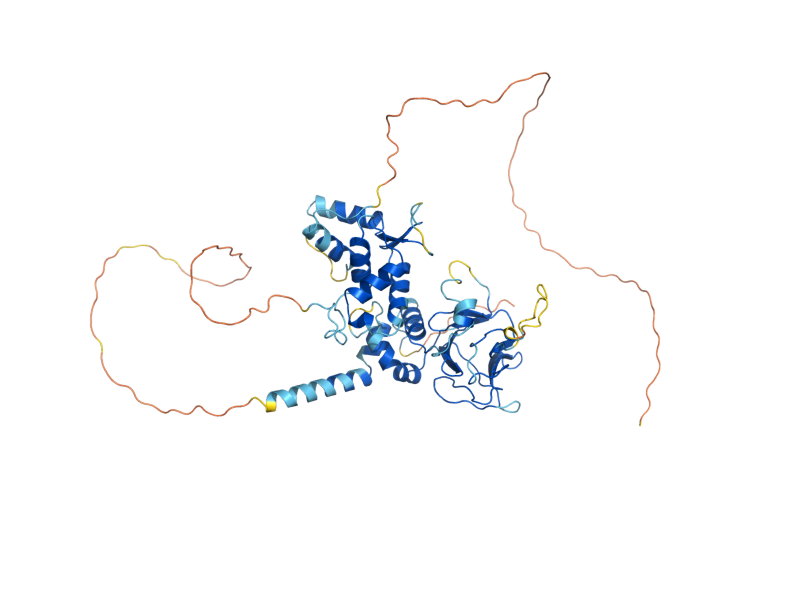
- Fkh1p is 484 amino acids long, short-lived, low in abundance; contains 3 forkhead domains; acetylated and ubiquitinylated on K13, sumoylated on K9, phosphorylated on 5 residues
Alleles
Curated mutant alleles for the specified gene, listed alphabetically. Click on the allele name to open the allele page. Click "SGD search" to view all alleles in search results.
View all FKH1 alleles in SGD search
Gene Ontology
GO Annotations consist of four mandatory components: a gene product, a term from one of the three Gene Ontology (GO) controlled vocabularies (Molecular Function, Biological Process, and Cellular Component), a reference, and an evidence code. SGD has manually curated and high-throughput GO Annotations, both derived from the literature, as well as computational, or predicted, annotations. Click "Gene Ontology Details" to view all GO information and evidence for this locus as well as biological processes it shares with other genes.
- Summary
- Sequence-specific DNA binding transcription factor involved in chromatin remodeling, mitotic transcription regulation, transcription termination, mating-type switching, and pseudohyphal growth; binds DNA replication origins and positively regulates replication initiation; also binds centromeres
View computational annotations
Molecular Function
- Manually Curated
- enables centromeric DNA binding (IDA)
- enables chromatin binding (IDA)
- enables DNA replication origin binding (IDA)
- enables DNA-binding transcription activator activity, RNA polymerase II-specific (IGI, IDA)
- enables DNA-binding transcription repressor activity, RNA polymerase II-specific (IDA, IGI)
- enables RNA polymerase II cis-regulatory region sequence-specific DNA binding (IDA)
- enables sequence-specific DNA binding (IDA)
- High-Throughput
- enables sequence-specific DNA binding (HDA)
Biological Process
- Manually Curated
- involved in chromatin remodeling (IGI, IMP)
- involved in donor selection (IGI, IMP)
- involved in G1/S transition of mitotic cell cycle (IGI)
- involved in G2/M transition of mitotic cell cycle (IGI, IMP)
- involved in mRNA 3'-end processing (IMP)
- involved in negative regulation of pseudohyphal growth (IGI)
- involved in negative regulation of transcription by RNA polymerase II (IMP, IGI)
- involved in negative regulation of transcription elongation by RNA polymerase II (IGI, IMP)
- involved in positive regulation of DNA replication initiation (IMP)
- involved in positive regulation of DNA-templated DNA replication initiation (IMP)
- involved in positive regulation of silent mating-type cassette heterochromatin formation (IGI, IMP)
- involved in positive regulation of transcription by RNA polymerase II (IGI)
- involved in termination of RNA polymerase II transcription (IGI, IMP)
Phenotype
Phenotype annotations for a gene are curated single mutant phenotypes that require an observable (e.g., "cell shape"), a qualifier (e.g., "abnormal"), a mutant type (e.g., null), strain background, and a reference. In addition, annotations are classified as classical genetics or high-throughput (e.g., large scale survey, systematic mutation set). Whenever possible, allele information and additional details are provided. Click "Phenotype Details" to view all phenotype annotations and evidence for this locus as well as phenotypes it shares with other genes.
- Summary
- Non-essential gene in reference strain S288C; null mutants have abnormal vacuolar morphology, reduced silencing at mating-type loci and abnormal mating-type switching; nulls are also sensitive to heat, and exhibit altered rates of cell cycle progression through the S and G2/M phases; overexpression slows growth
Classical Genetics
- null
- overexpression
- null
- overexpression
Large-scale Survey
Interaction
Interaction annotations are curated by BioGRID and include physical or genetic interactions observed between at least two genes. An interaction annotation is composed of the interaction type, name of the interactor, assay type (e.g., Two-Hybrid), annotation type (e.g., manual or high-throughput), and a reference, as well as other experimental details. Click "Interaction Details" to view all interaction annotations and evidence for this locus, including an interaction visualization.
- Summary
- Fkh1p interacts physically with proteins involved in DNA replication; FKH1 interacts genetically with genes involved in mitotic cell cycle; the fkh1 null mutant is viable, the null mutant of paralog fkh2 is viable, the fkh1 fkh2 double mutant is inviable
207 total interactions for 142 unique genes
Regulation
The number of putative Regulators (genes that regulate it) and Targets (genes it regulates) for the given locus, based on experimental evidence. This evidence includes data generated through high-throughput techniques. Click "Regulation Details" to view all regulation annotations, shared GO enrichment among regulation Targets, and a regulator/target diagram for the locus.
- Summary
- FKH1 encodes a transcription factor that is a member of the widely conserved eukaryotic forkhead family of proteins, which contain the characteristic forkhead (FH), or winged helix, DNA-binding domain. Many forkhead proteins also have a second domain referred to as the forkhead-associated (FHA) domain which binds phosphorylated threonine residues within proteins. Fkh1p has both FH and FHA domains, and is involved in regulation of expression of the CLB2 cluster of genes during the G2/M phase of the mitotic cell cycle. The CLB2 cluster of genes includes mitotic regulators such as CLB1, CLB2, CDC5 and CDC20, as well as SWI5 and ACE2, transcription factors required for the subsequent temporal wave of cell cycle regulated gene expression in the M/G1 phase interval. Fkh1p cooperates with Isw1p to remodel chromatin and repress transcription of CLB2 during G2/M. Fkh1p associates with coding regions of active genes to regulate transcription by affecting the phosphorylation status of the C-terminal repeat domain (CTD) of RNA Polymerase II. The Fkh1p binding site 5'-GTAAACAAA-3' is present in over 1400 locations throughout the genome. FKH1 has additional roles in the establishment of chromatin silencing at the silent mating-type cassette and in the regulation of donor preference during mating type switching. FKH1 and the Swi4p/Swi6p-containing SCB-binding factor (SBF) independently regulate donor preference through direct interactions with a cis-acting sequence called the recombination enhancer, with Fkh1p binding in the G2 phase and SBF binding in the G1 phase of the cell cycle.
Expression
Expression data are derived from records contained in the Gene Expression Omnibus (GEO), and are first log2 transformed and normalized. Referenced datasets may contain one or more condition(s), and as a result there may be a greater number of conditions than datasets represented in a single clickable histogram bar. The histogram division at 0.0 separates the down-regulated (green) conditions and datasets from those that are up-regulated (red). Click "Expression Details" to view all expression annotations and details for this locus, including a visualization of genes that share a similar expression pattern.
Summary Paragraph
A summary of the locus, written by SGD Biocurators following a thorough review of the literature. Links to gene names and curated GO terms are included within the Summary Paragraphs.
Last Updated: 2016-03-23
All Curated Literature
All manually curated literature for the specified gene, shown as a count of references by year of publication followed by the most recent papers. Click "Literature Details" or "See all" to view all literature information for this locus, organized into topics according to their relevance to the gene (Primary Literature, Additional Literature, or Review).
Loading literature…