New & Noteworthy
Creating an Ethanol-Making ‘Super Bowl’ Championship Team
May 24, 2017

Tom Brady makes a team better by making the players around him play better. The same thing can be said for a mutant RPB7 gene that makes other genes work together better as an ethanol-making team. By Paul Keleher [CC BY 2.0 (http://creativecommons.org/licenses/by/2.0)%5D, via Wikimedia Commons.
There are a few ways to turn a failing sports team around. One is to tailor individual training to make each player better. Now, the team is better overall because of the changes each player makes.
Another way to improve a team is to change a player in a key position who makes everyone better. A classic example of this is the American football team, the New England Patriots.
On September 23, 2001, Drew Bledsoe, then the starting star quarterback of the New England Patriots, took a savage hit from New York Jets linebacker Mo Lewis. The Patriots replaced Bledsoe with his backup, Tom Brady, and some might argue, the team (whom Brady led to their first Super Bowl win that year) and the NFL, has not been the same since.
Quarterback Tom Brady, along with head coach Bill Belichick, makes whomever the New England Patriots bring in better. Wide receivers, tight ends, and running backs can be replaced in the lineup without the team missing a beat. He just makes the players around him better than they might be on another team.
In a new study, Qiu and Jiang take a “Patriots” approach to ethanol production in the yeast Saccharomyces cerevisiae. Rather than improving individual genes on their own, these authors instead decided to “bring in” a new version of RPB7, a gene that encodes a key subunit of RNA polymerase II, the molecular machine responsible for making messenger RNA (mRNA).
They hoped that changing this pivotal transcriptional player would cause lots of other genes to do “better” so that “team” yeast would make a lot more ethanol. Their hopes were realized in their Tom Brady equivalent—a mutant they called M1. Yeast bearing this mutant RPB7 gene became the Super Bowl champs of ethanol production.
One of the keys to increasing ethanol production in yeast is to find strains that are more tolerant of high levels of ethanol. The more ethanol they can withstand, the more they can make.
These authors used error prone PCR mutagenesis of the RPB7 gene to find their game-changing mutant. They then took their library of ~108 clones and cultured them in increasing amounts of ethanol, selecting for more ethanol-resistant strains.
After 3-5 rounds of subculture, they plated the cells onto media containing ethanol. Around 30 colonies were picked and sequenced with the best mutant being the one with two mutations—Y25N and A76T. They named this mutant M1.
This mutant grew a bit better than the parental strain background, S288C, in the absence of ethanol, but where M1 really shined was when ethanol was around. It grew around twice as fast in 8% ethanol and could grow at 10%, a concentration that completely inhibited the parental strain from growing.
Being able to withstand high levels of ethanol is important, but it isn’t all that yeast have to deal with. There are multiple other stressors around when you are swimming in 20 proof media.
For example, yeast can suffer from high levels of reactive oxygen species (ROS). M1 not only tolerated 3.5 mM hydrogen peroxide, a proxy for ROS, better than the parental strain, but it also had around 37% of ROS levels inside cells than that of the parental strain. M1 can deal with high levels of ethanol and ROS.
The authors then tested how this mutant dealt with other potential fermentation problems. For example, acetate, a fermentation byproduct, and high levels of NaCl both inhibit yeast growth. M1 tolerated 80 mM acetic acid and 1.5 M NaCl better than the parental strain did.
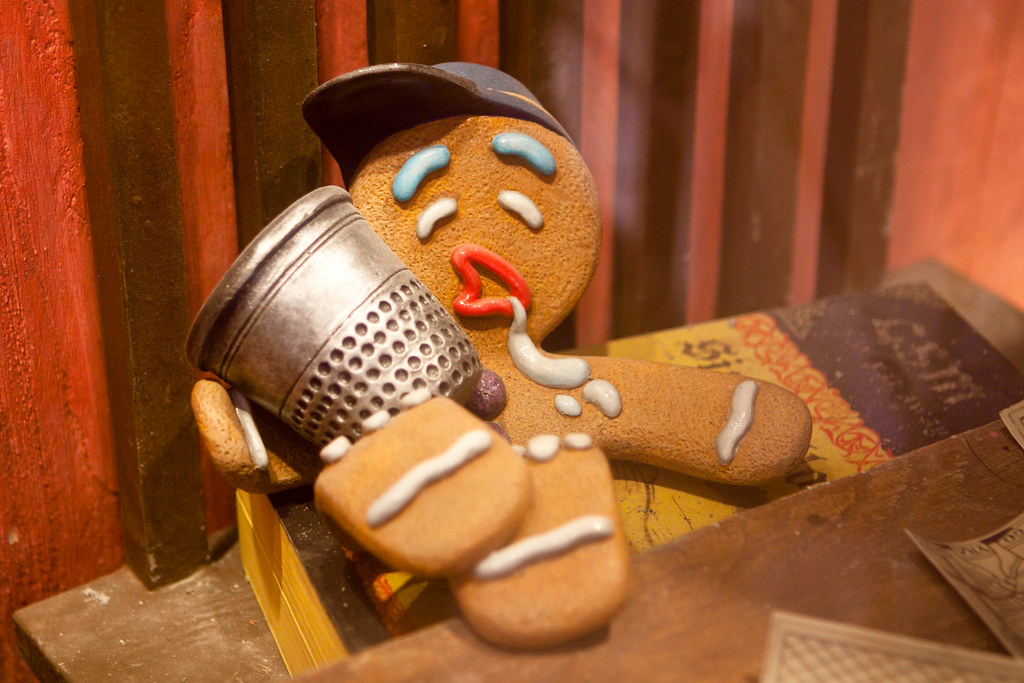
A couple of mutations in the RPB7 gene makes yeast able to tolerate alcohol way better than this guy. By jerome Chua [CC BY 2.0 (http://creativecommons.org/licenses/by/2.0)%5D, via flickr.
M1 appeared to be a champion mutant for making ethanol, and the fermentation studies bore this out.
Under a wide variety of conditions, M1 outperformed the parental strain in terms of growth rate, cell mass, and amount of ethanol made. For example, after 54 hours, yeast containing the M1 mutation of RPB7 managed to make 122.85 g/L of ethanol, 96.58% of the theoretical yield. This is a 40% increase over the control strain. Quite the ethanol producer!
Finally, Qiu and Jiang used microarray analysis of the parental and M1 strains at high levels of ethanol to discover the genes that M1 affected. They found 369 out of a total of 6256 genes behaved differently between the two strains. Of the 369, 144 were up-regulated and 225 were down-regulated.
I don’t have time to go over all the genes they found but a great many of them make sense. As the authors write, “…a significant set of genes are associated with energy metabolism, including glycolysis, alcoholic fermentation, hexose transport, and NAD+ synthesis.” M1 seems fine-tuned for making ethanol.
A mutant subunit in RNA polymerase II has made yeast better at making high levels of ethanol, most likely by affecting many key genes at once. It is a fascinating way to quickly affect a whole suite of genes involved in a process. In the ethanol-making Super Bowl, we have a new champion yeast strain, M1.
by Barry Starr, Ph.D., Director of Outreach Activities, Stanford Genetics
Categories: Research Spotlight
Tags: ethanol, fermentation, NFL, Patriots, RNA polymerase II, RPB7, Super Bowl, Tom Brady
Mass Production in Yeast
May 11, 2017
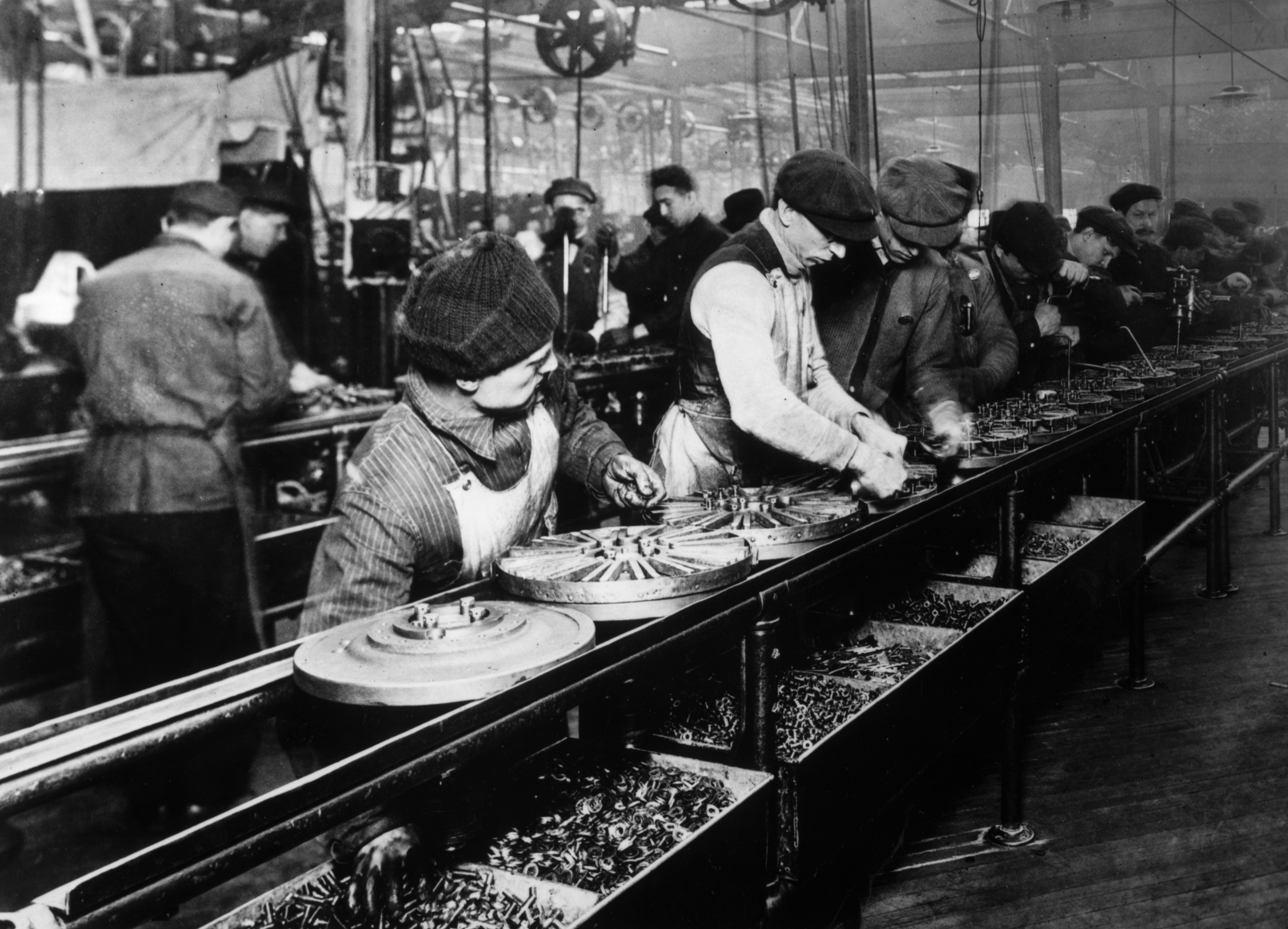
This approach changed everything when it came to manufacturing in factories. Perhaps the ideas in this new study will change things for manufacturing in cells.Image from Wikimedia Commons
After Henry Ford invented the moving assembly line, manufacturing was never the same. With it, his workers were able to push out a car every 2 ½ hours instead of the 12 it used to take. (Another website said it was reduced to 90 min!) The technology quickly spread to every factory.
Now of course, an assembly line is only as fast as its slowest worker. If someone is taking extra time to bolt down that part, then everyone downstream will have to go slower too, resulting in fewer cars being made.
But, you also can’t go too fast. If you do, someone can get injured, shutting down the whole line. (Or the worker has to eat all the candy to keep up, like Lucy.)
And you want to make sure things happen in the right part of the factory. You don’t want the paint sprayer out in the open, poisoning factory workers. So, that needs to happen in a special room.
This also applies to cell processes where something complicated is built, step by enzymatic step. All the enzymes need to be at the right levels and in the right place to maximize the productivity of the whole process.
This all becomes very obvious when you try to move an enzymatic process from one beast to another. What worked perfectly before, now barely works at all.
One way to fix this is through trial and error, trying to optimize one part of the process at a time. This is incredibly time consuming!
In a new study out in Nature Communications, Awan and coworkers show one way to tweak all of the enzymatic steps involved in making penicillin at the same time in the yeast Saccharomyces cerevisiae. While this isn’t that useful for making this antibiotic (there are better ways available right now), it does show how researchers can apply the same techniques to perhaps identify and produce new antibiotics. And, it can also be applied to other unrelated enzymatic processes.
Penicillin is made in a five-step process in filamentous fungi. In the first part of the process, two enzymes create a tripeptide precursor using alpha-aminoadipic acid, cysteine, and valine, called ACV. This part of the process had been previously recapitulated in yeast, so Awan and coworkers used this as a starting point for their penicillin producing strain.
The next part of the process uses the last three enzymes and takes place in peroxisomes in filamentous fungi. These authors found that they only got penicillin when these enzymes were tagged to be sent to the peroxisome in yeast. Like a special room for spray painting cars, these enzymes need to be in the right place to make penicillin.
But this was by no stretch of the imagination an efficient penicillin-making machine. The thing managed only 90 pg/ml in the media. As Ursula from Little Mermaid might say, “Pathetic.”

From Tumblr
Still, it is a starting point. The next step is to get the yeast to crank out more penicillin. To do this, they used a combinatorial approach to optimize the process all at once. Well, not really all at once.
First, they set out to optimize how much of the precursor ACV the yeast made. Then, they optimized how much ACV was converted to penicillin.
Awan and coworkers created a library of low copy plasmids that had the genes for the first two enzymes, pcbAB and npgA, under the control of different pairs of promoters. One plasmid, with the pTDH3 promoter driving pcbAB expression, and the pPGK1 promoter driving npgA expression, outperformed all of the others. As measured by Liquid Chromatography-Mass Spectrometry (LCMS), the yield of ACV increased from 20 to ~280 ng/ml.
Next, the authors used this new strain as a starting point for optimizing the activity of the final three enzymes using a similar approach. They used a “…one-pot combinatorial DNA assembly using Golden Gate cloning…” to make a library of around 1000 high copy plasmids where each gene was under the control of one of ten different promoters of varying strength. Using LCMS they found strains that could make 3 ng/ml of penicillin, a significant improvement over the original 90 pg/ml.
The 3 ng/ml of penicillin in the media should be high enough concentration to inhibit the growth of bacteria like Streptococcus pyogenes. So, they confirmed that their penicillin was active using growth inhibition assays.
After sequencing the plasmids, the authors saw that the best strains tended to have strong constitutive promoters driving one of the genes, pclA, and medium strength promoters driving another one of the genes, pcbC. They used a minION DNA sequencer to confirm that this was not the result of a biased library.
As a final step, they set out to optimize penicillin production and to increase the throughput of their assay. They created another library that swapped six different promoters that varied in strength from medium to high for each of the last three genes in the pathway, pclA, pcbC and penDE. Instead of using LCMS to screen for penicillin production, they used a 96 well plate-based assay that looked for inhibition of Streptococcus pyogenes growth for their 120 new strains.
They selected 12 of the highest performing strains and confirmed by LCMS that they made lots of penicillin. Five of the strains made more than 5 ng/ml, a more than 50-fold increase over their original strain.
As this concentration is still three orders of magnitude below what other organisms can currently do, this new yeast strain will not go into penicillin production any time soon. But this study gives us a way to quickly optimize antibiotic production using growth inhibition assays instead of the more cumbersome LCMS.
And it isn’t restricted to just antibiotic production. Similar combinatorial approaches can be used for almost any stepwise enzymatic process. Researchers can create libraries of plasmids where levels of enzyme vary and use the long reads of minION DNA sequencing technology to confirm that their results are not skewed by a biased library.
As usual, this is only possible as a simple, easy procedure because of the awesome power of yeast genetics (#APOYG). Researchers have the tools to use yeast to find new antibiotics and to manufacture them at a high rate, like inventing the car and the assembly line at the same time.
by Barry Starr, Ph.D., Director of Outreach Activities, Stanford Genetics
Categories: Research Spotlight
Tags: ACV, liquid chromatography-mass spectrometry, minION, npgA, pcbAB, pcbC, pclA, penDE, penicillin synthesis
Meiotic Fail Safes
May 04, 2017
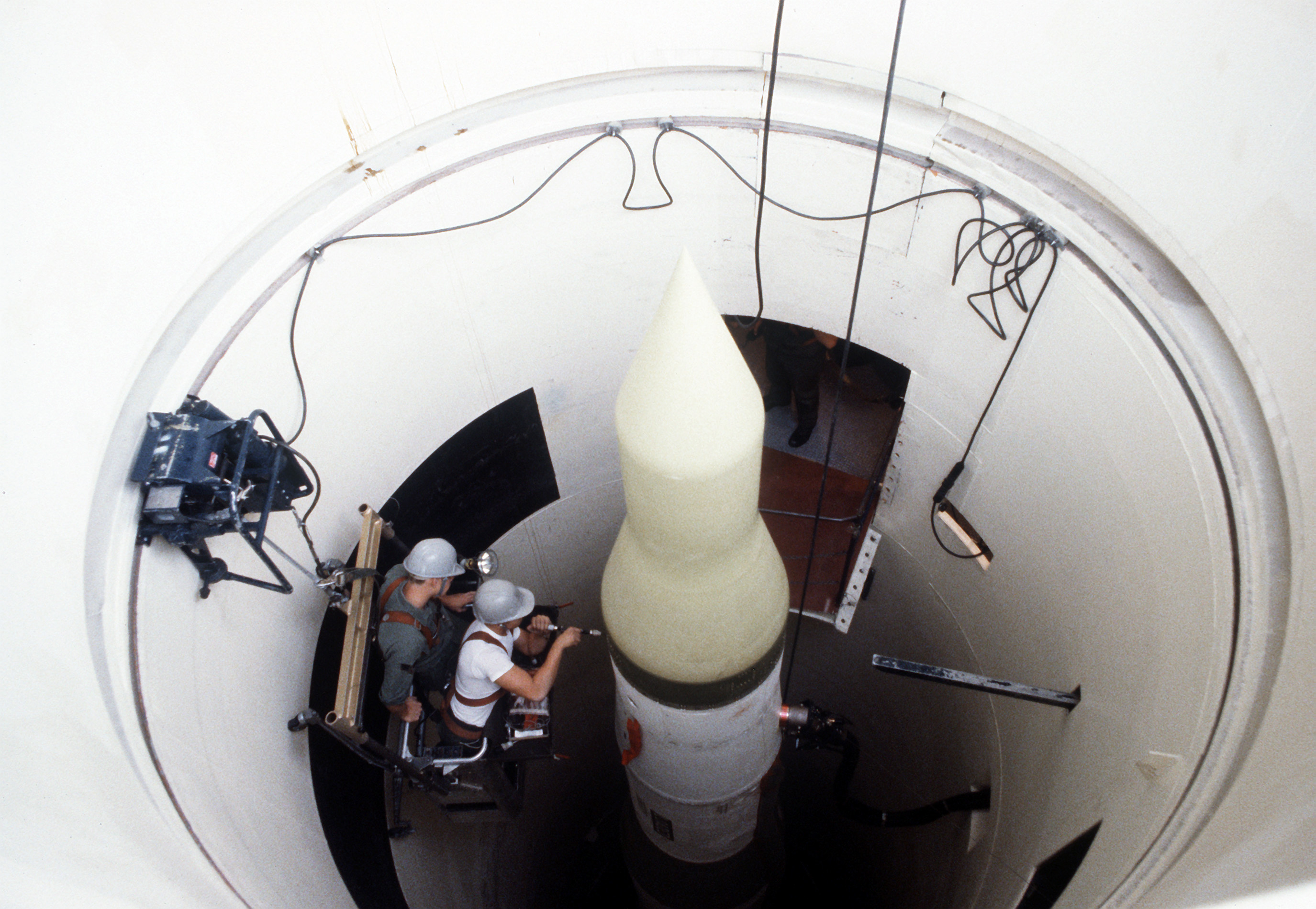
Launching into meiosis too soon is as dangerous (for a cell) as launching a nuclear missile. Luckily both have protocols to make sure each can only happen in the right circumstances. (Hopefully never for the nuclear missile.) Image from Wikimedia Commons.
If the movie WarGames is anything to go on, the US government does not make it easy to launch a nuclear missile. Two soldiers have to do many things simultaneously and in the right order before that missile can take flight.
This makes perfect sense as you do not want to launch a nuclear attack unless you absolutely have to. The continued existence of the human race depends on these fail safes being in place and working. The same goes for a cell that is heading into meiosis.
Meiotic fail safes are in place to ensure the survival of a cell during the dangerous, early part of meiosis, when there are lots of double-strand breaks in the DNA. These all need to be resolved before a cell is allowed to continue through meiosis to create gametes. If the cell moves on while the breaks are still there, gamete production will fail and the cells will die.
While the exact sequence of events needed to launch World War III is known (at least by a few people), the exact details of getting a cell safely through meiosis are a bit murkier. With the help of good old Saccharomyces cerevisiae, we have the broad outlines, but are still investigating the finer points.
A new study by Prugar and coworkers in GENETICS has helped clear up a bit of the murk in yeast. They have uncovered a connection between the meiosis-specific kinase Mek1p and the transcription factor Ndt80p that may explain how a cell “knows” when it is safe enough to emerge from prophase and keep progressing through Meiosis I.
Mek1p is known to be active when there are lots of these double-strand breaks around and to lose activity as these breaks are resolved. Ndt80p, on the other hand, is inactive when there are lots of these breaks and active when they are resolved. So it makes sense that their activities might be related to each other.
In this study, the authors show that once Mek1p activity falls below a certain level, it can no longer keep tamping down Ndt80p activity. Once unleashed, Ndt80p can go on to activate many genes, including the polo-like kinase CDC5 and the cyclin CLB1. This round of gene activation allows the cell to progress through meiosis.
The key to teasing this out was a set of experiments where Prugar and coworkers were able to control the activities of Mek1p and Ndt80p independent of the cell’s DNA state. It is like circumventing the set of protocols to get those missiles launched.
To independently control Ndt80p activity, they used a form of the protein that requires estradiol to be active. And they controlled the activity of Mek1p by using a mutant, mek1-as, that is sensitive to the purine analogue 1-NA-PP1. In the presence of this inhibitor, Mek1p stops working.
They looked at the targets of these two proteins to infer activity. For example, they determined if Ndt80p was active by looking for the presence of CDC5. And to see if Mek1p was active, they looked for phosphorylated Hed1p.
In the first experiment, they showed that in the absence of both estradiol and 1-NA-PP1, Hed1p stayed phosphorylated. Mek1p was constitutively active in the absence of Ndt80p even as double-strand breaks were resolved. (They used phosphorylated Hop1p as an indirect measure of double-strand breaks.)

In the end, as yeast relies on MEK1 to prevent a meiotic disaster, humans, not computers, kept the world safe in the movie WarGames. Image from flickr
When Ndt80p was activated through the addition of estradiol, CDC5 was turned on and Hed1p lost its phosphorylation. This loss of Mek1p activity did not happen as quickly as with 1-NA-PP1.
These results suggest a negative interaction between Mek1p and Ndt80p. When Ndt80p is active, Mek1p is not and when Mek1p is active, Ndt80p is not. The resolution of the DNA breaks as indicated by the loss of phosphorylated Hop1p was not sufficient to shut off Mek1p activity. It took the activation of Ndt80p for this to happen.
Well, Ndt80p did not directly cause Mek1p’s inhibition. A second set of experiments suggested that a target of Ndt80p, CDC5, was responsible.
For this they made Cdc5p activity independent of Ndt80p induction by making it dependent on estradiol, similar to what they did with Ndt80p. Using a strain deleted for NDT80, they found that inducing Cdc5p activity was enough to eliminate Mek1p activity.
I don’t have the space to go into the rest of the experiments in this study, but I urge you to read it if you want to learn about more of the details of the cell’s protocol for know when it is OK to progress through meiosis.
With the help of the awesome power of yeast genetics (#APOYG), Prugar and coworkers have added to our knowledge about the safeguards that are in place to keep a cell from launching into meiosis too soon. Turns out they are even more complicated than the ones that prevent accidental thermonuclear war.
by Barry Starr, Ph.D., Director of Outreach Activities, Stanford Genetics
Categories: Research Spotlight
Tags: CDC5, double-strand breaks, DSB, meiosis, MEK1, NDT80
Knock out YME1, Luke
April 20, 2017

Instead of an exhaust port, one of a mitochondrion’s fatal flaws may be the YME1 gene. Image from Manoel Lemos, flickr.
In the original Star Wars, Luke destroys the Death Star with a precise strike of proton torpedoes down a small thermal exhaust port. For him it was as easy as bullseyeing “womp rats in my T-16 back home.”
Luke and the rest of the Rebel Alliance learned of this engineered fatal flaw from Jyn and her friends in the prequel Rogue One. With this information the Rebel Alliance was able to keep the rebellion alive long enough to finally bring down the Empire by the end of Return of the Jedi.
It turns out that our friend Saccharomyces cerevisiae has taught us about a fatal flaw in mitochondria. Like proton torpedoes in an exhaust port, when the gene YME1 is inactivated, mitochondria become unstable. But instead of bits of Death Star raining down on nearby planets, mitochondrial DNA (mtDNA) is released into the cytoplasm.
Sometimes this mtDNA can end up in the nucleus and find its way into nuclear DNA. And if the conclusions of a new study in Genome Medicine by Srinivasainagendra and coworkers turns out to be right, this numtogenesis (as the authors call this process) can have profound consequences when it happens in people. Their data suggests that it might lead to cancer or possibly cause cancers to spread.
These researchers searched through whole genomes of colon adenocarcinoma patients and found that these cancer cells had 4.2-fold more mtDNA insertions compared to noncancerous cells from the same patient. They also found that patients with more of these insertions tended to do worse (although the sample sizes were too small to say this definitively).
Why is this happening in the cancer cells? What has caused the mitochondria to give up their DNA?
Srinivasainagendra and coworkers turned to previous work that had been done on the YME1 gene in the yeast S. cerevisiae to find one possible reason. YME1 had been shown to be an important suppressor mtDNA migration to the nucleus. Perhaps this was true in mammalian cells as well.
A search through the genomes of cancers suggested that this seemed to be the case. Around 16% of the colorectal tumors they looked at had a mutated YME1L1 gene, the human homologue of YME1. And mutated YME1L1 genes were found in other tumors as well.
If only destroying gene function was as fun.
They used CRISPR/Cas9 to directly test the effects of knocking out YME1L1 in the breast cancer cell line MCF-7. The knock out cells had a 4-fold increase in the amount mtDNA in the nuclear fraction compared to cells that still had working YME1L1.
As a final experiment, they used a yeast strain, yme1-1, in which YME1 function was inactivated, to show that the human homologue, YME1L1, could suppress the migration of mtDNA to the nucleus.
This yme1-1 strain has a TRP1 gene encoded in the mtDNA instead of the nucleus. Since the gene cannot be read by the mitochondrial transcription machinery, the only way this yeast strain can survive in the absence of tryptophan is if the TRP1 gene moves from the mitochondrion to the nucleus.
In their experiment, with vector alone, they got around 1000 TRP+ colonies with yme1-1. When they added back yeast YME1, this number dropped to less than 50 compared to the 100 or so they got when they added the human homologue, YME1L1. So YME1L1 can suppress mtDNA migration to the nucleus.
Given that YME1L1 was mutated in just a subset of the cancers, it is unlikely that it is the only player in the mtDNA these authors found in the nuclei of cancer cells. But it does look like it is one way this can happen.
And it would have been very hard to fish out the human gene without the critical work that had been done in yeast previously. Yeast shows us the way again. #APOYG
by Barry Starr, Ph.D., Director of Outreach Activities, Stanford Genetics
Categories: Research Spotlight
Tags: cancer, colon cancer, CRISPR/Cas9, MCF-7, mtDNA, nuMt, nuMtogenesis, YME1, YME1L1
Exploring the Global Yeast Genetic Interaction Network
April 17, 2017

Global yeast genetic interaction profile similarity network. Image from TheCellMap.org.
With the construction of a global genetic interaction network in S. cerevisiae, it’s not hard to see why yeast genetic interactions remain a treasure trove for biological discovery. When combined with tools for visualization and analysis, these data can be used to draw powerful functional maps of the cell and infer potential functions for uncharacterized genes.
In a recent paper published in G3: Genes|Genomes|Genetics, Usaj et al. describe a web-based resource for exploring the global yeast genetic interaction network: TheCellMap.org. TheCellMap.org is an online database and visualization tool for quantitative yeast genetic interaction data. It provides an interactive version of the global yeast genetic interaction similarity network described by Costanzo et al., enabling users to scroll through and zoom in on different clusters of functionally related genes within the network. Users can search for specific genes or alleles, extract and re-organize sub-networks for genes of interest, functionally annotate genetic interactions, and more. Further, if more details about a gene are needed, users can even double-click on the gene to be taken to its respective locus summary page at SGD!
For more information about this resource, see http://TheCellMap.org/about/ or access the publication at https://doi.org/10.1534/g3.117.040220.
Categories: Announcements
The Dark Yeast Rises
April 04, 2017

Sometimes in life you need to take risks to survive and prosper. Maybe you need to take a leap of faith like Bruce Wayne does to escape that pit in The Dark Knight Rises. Or you need to try a risky business strategy to put your company out in front.
While these are critical things to do at the time, chronic risk-taking is not usually a good idea. Even Bruce Wayne retires to Florence at the end of The Dark Knight Rises, his risky life choices done now that he has saved his beloved Gotham City. He can now settle down with Selina Kyle (Catwoman) and live happily (and safely) ever after.
Something similar can happen in the budding yeast, Saccharomyces cerevisiae. In the right environment, certain yeasts can build up mutations like mad, hoping to hit on one that lets them make it out of that pit.
But then, over time, yeasts with the successful mutation lose that frenetic mutation rate—they take fewer risks with their DNA. One way they can do this is by ending up with a mutation that suppresses the high mutation rate. This is like Bruce Wayne retiring to a nice villa on the Arno.
Another way they can reestablish their old mutation rate is to mate with a nonmutator, a yeast strain that does not risk its DNA with a high mutation rate. Now, the next generations have the beneficial mutation and a lowered mutation rate as well. It is as if Bruce Wayne settled down with an accountant instead of Catwoman and had risk-averse children to carry on the Wayne name.
Bui and coworkers investigate this phenomenon in yeast in a new study out in GENETICS. They show that natural isolates exist that can sporulate into one of these mutator strains. And that at least one strain predicted to have a high mutation rate has a number of suppressor mutations that tamp down that higher rate.
Previous work had shown that a high mutation rate can happen with mutations in two genes in the mismatch repair (MMR) pathway, MLH1 and PMS1. This was discovered when researchers saw that some of the haploid strains from a mating of two laboratory strains, S288C and SK1, showed this mutator phenotype. A closer look revealed that S288C has a mutation in MLH1, and SK1 has a mutation in PMS1.
Bui and coworkers show that these mutator haploid strains outcompete other strains in high salt media. The strain hits upon mutations that allowed for better survival in high salt faster than its slower mutating brethren. But this advantage does not last.
After 120 generations these mutator strains start to lag behind strains with more typical mutation rates. Their DNA becomes as beat up as Bruce Wayne’s body by the third movie.
The researchers next looked at the MLH1 and PMS1 genes of 1,010 natural isolates of S. cerevisiae to see if there were any that might be able to sporulate into a mutator strain. Or that were already mutator strains themselves.
Since the mutations that lead to the mutator phenotype are recessive, strains that are heterozygotes for mutations in both genes should be able to form haploid spores with the higher mutation rate. They found 18 that fit the bill.
They also found one strain, YJM523, that was homozygous for both mutations and so would be predicted to have a high mutation rate. They further investigated this strain.

The first thing they did was to test the YJM523 mutant genes in an S288C background. They found that these two mutant genes did indeed give S288C a mutator phenotype. In fact, it had a higher mutation rate than the original genes from S288C and SK1 did, suggesting there were other mutations in one or both YJM523 genes that further increased the mutation rate.
These researchers next wanted to determine if YJM523 had a higher mutation rate or not, but needed to first develop a new assay that could be used in natural isolates. They came up with a reporter system that is not dependent on the typical markers used in yeast experiments, but instead relies on two antibiotic markers.
The reporter uses the NatMX antibiotic resistance marker for selection and the KanMX marker to identify revertant mutants. By scoring the number of colonies resistant to both antibiotics, they could determine the mutation rate.
When the researchers did this experiment, they found that YJM523 did not have a particularly high mutation rate. Sporulation experiments showed that this was most likely due to multiple suppressor mutations.
So out in the wild, the potential for mutator strains exists. And a close look at the genome of YJM523 showed that if it did have a mutator phenotype, it was for a short time. This yeast at least quickly lost its high mutation rate (assuming it ever had one).
This study helps to explain how yeast can obtain that mutator phenotype that researchers have seen before. And how yeast can escape that mutation pit to get back to the safety of a reasonable DNA repair pathway. To quote the prisoners in The Dark Knight, “Deshi Basara”, or ‘rise up’ yeast!
by Barry Starr, Ph.D., Director of Outreach Activities, Stanford Genetics
Categories: Research Spotlight
Tags: adaptation, DNA mismatch repair, experimental evolution, genetic incompatibility, mutator phenotype, natural yeast isolates
Too Big for the Oven
March 23, 2017

Just like baking bread, “oven” size matters when trying to increase yields of fatty acids in yeast.
In a classic skit from I Love Lucy, Lucy bakes a loaf of bread that is so big it ends up coming out of the oven, pushing her against the far wall. Definitely one of the funniest moments from early TV.
In a new study in Nature Communications, Gajewski and coworkers show that the yeast enzyme fatty acid synthase (FAS) complex, is a bit less comical when it comes to the fatty acid chains it makes. When these authors engineer the enzyme complex to “shrink” the oven, the “bread” it makes becomes smaller. A more constrained active site that holds onto its growing fatty acids less tightly makes shorter-chained fatty acids.
This is an important finding because these shorter-chained fatty acids are so useful as precursors for products like biofuels. Engineered yeast like these may, among other things, one day help us get to a carbon neutral future.
Gajewski and coworkers were able to pull this off because the 3-D structure of this enzyme complex is so well understood. They engineered changes that would be predicted to restrict the growth of the fatty acid chain.
For example, a key player in the elongation step happens in the condensation domain (KD) of the complex. They focused initially on the amino acid methionine at position 1251 (M1251).
This amino acid sticks out into the active site and needs to rotate out of the way when the fatty acid chain elongates. The authors reasoned that if they made it bigger and harder to rotate, the enzyme complex wouldn’t be as good at elongating the fatty acid chains it makes. The loaf would stop growing when it ran out of room.
They were right. When they mutated a nearby glycine to serine (G1250S), the yeast now made 15.3 mg/liter of fatty acids with 6 carbons (C6 fatty acids), a 9-fold increase over wild type. FAS usually makes C12-C18 fatty acids.
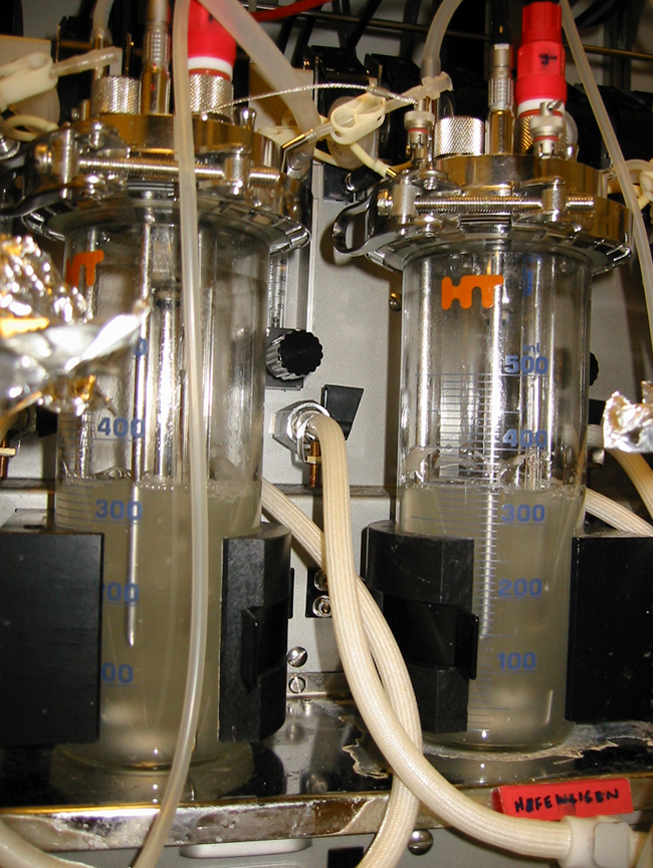
Tomorrow’s oil wells? By (Image: Maitreya Dunham) [CC BY 2.5], via Wikimedia Commons

They got even better results when they bulked up position 1251 by changing the methionine to a tryptophan (M1251W). Now the yeast made 19.1 mg/liter of C6 fatty acids, a 12-fold increase, and 32.7 mg/liter of C8 fatty acids, a 56-fold increase. They made a third mutation, F1279Y, that ended up affecting growth adversely when combined with G1250S.
This was good, but not good enough. To be commercially viable, they needed higher yields. They next wanted to make mutations that would cause the enzyme complex to hold onto the fatty acids less tightly, like having the baker remove the bread from the oven before it got too big.
For this, they focused on the malonyl/palmitoyl transferase (MPT) domain. They reasoned that by making the complex less able to bind malonyl, it would also bind the growing fatty acid chain less well too. Again, they were right.
When they replaced an arginine with a lysine at position 1834 (R1834K), the yeast made 100 mg/liter of mostly C8 fatty acids, a 23-fold increase. They made an additional mutation, I306A, that had little effect on its own.
Things got really interesting when they looked at different combinations of these mutations. When they mixed and matched them, they pushed yields up even more. And different combinations made different proportions of various sized fatty acids. Scientists can pick the mutant that gives them their desired product.
The best yield was with yeast carrying the triple mutant, I306A-R1834K-G1250S. These yeast managed to make 118 mg/liter of shorter-chained fatty acids.
Gajewski and coworkers boosted this mutant’s yield even more by changing out the promoter. Doing so resulted in the yeast making 464.4 mg/liter of the enzyme.
We now have a strain of yeast that can make a lot of the precursors needed for making biofuels and other chemicals. And scientists can pick the mutant that gives them more of their desired precursor. If they want more C6, they should use one mutant and if they want more C8 they should use a different one.
#APOYG is helping to create designer molecules that could, among other things, help steer us toward a more carbon neutral future.
by Barry Starr, Ph.D., Director of Outreach Activities, Stanford Genetics
Categories: Research Spotlight
Tags: biofuels, fatty acid synthesis, precursor
Apply Now for the 2017 Yeast Genetics & Genomics Course
March 17, 2017

For almost 50 years, the legendary Yeast Genetics & Genomics course has been taught each summer at Cold Spring Harbor Laboratory.
For almost 50 years, the legendary Yeast Genetics & Genomics course has been taught each summer at Cold Spring Harbor Laboratory. (OK, the name didn’t include “Genomics” in the beginning…). The list of people who have taken the course reads like a Who’s Who of yeast research, including Nobel laureates and many of today’s leading scientists.
The application deadline is April 15th, so don’t miss your chance! Find all the details and application form here.
This year’s instructors – Grant Brown, Maitreya Dunham, and Elçin Ünal – have designed a course (July 25 – August 14) that provides a comprehensive education in all things yeast, from classical genetics through up-to-the-minute genomics. Students will perform and interpret experiments, learning about things like:
- How to Find and Analyze Yeast Information Using SGD
- Isolation and Characterization of Mutants
- Transformation of Plasmids & Integrating DNAs
- Meiosis & Tetrad Dissection as well as mitotic recombination
- Synthetic Genetic Array Analysis
- Next-Gen. whole-genome and multiplexed DNA barcode sequencing
- Genome-based methods of analysis
- Visualization of yeast using light and fluorescence microscopy
- Exploring synthetic biology with CRISPR/CAS9-directed engineering of biosynthetic pathways
Techniques have been summarized in a completely updated course manual, which was recently published by CSHL Press.

There’s fierce competition between students at CSHL courses in the Plate Race, a relay in which teams carry stacks of 40 Petri dishes (used, of course).
Scientists who aren’t part of large, well-known yeast labs are especially encouraged to apply – for example, professors and instructors who want to incorporate yeast into their undergraduate genetics classrooms; scientists who want to transition from mathematical, computational, or engineering disciplines into bench science; and researchers from small labs or institutions where it would otherwise be difficult to learn the fundamentals of yeast genetics and genomics. Significant stipends (in the 30-50% range of total fees) are available to individuals expressing a need for financial support and who are selected into the course.
Besides its scientific content, the fun and camaraderie at the course is also legendary. In between all the hard work there are late-night chats at the bar and swimming at the beach. There’s a fierce competition between students at the various CSHL courses in the Plate Race, which is a relay in which teams have to carry stacks of 40 Petri dishes (used, of course). There’s also a sailboat trip, a microscopy contest, and a mysterious “Dr. Evil” lab!
The Yeast Genetics & Genomics Course is loads of fun – don’t miss out!
Categories: Announcements
In Yeast, Being Old Can Be a Good Thing
March 13, 2017

Like this marathon runner, some older yeast are able to win out over their younger counterparts. In the right environment, that is! Image from Wikimedia Commons.
A square slab can make an excellent door stop. Over time, though, the corners can get chipped, making the slab a bit rounded. This new bit of rock makes a less useful doorstop, but a much better wheel! The chipping and aging of the original stone has made it worse in some situations, but better in others.
A new study by Frenk and coworkers in Aging Cell shows that something similar can happen in yeast. Young yeast are much better at utilizing glucose, but older yeast have them beat with galactose (as well as with raffinose and acetate).
One way to think about this is that age turns yeast from a glucose specialist into a sugar generalist. Aging chips away at a yeast cell’s ability to use glucose, but this loss results in a gain in its ability to use galactose.
So at least in the right environment (i.e., when there’s lots of galactose around), with our old friend Saccharomyces cerevisiae, there can be advantages to getting older.
What makes this particularly fascinating is that at least in yeast, this suggests that there may be a positive selection for aging because of the advantage it can give in certain environments. Those yeast who are ageless would compete less well compared to their aging counterparts when their glucose was taken away. The aging process wins out over immortality!
Frenk and coworkers used a relatively simple experimental set up. Take young cells and old cells, mix them together, and see which outcompetes the other using various sugars.
They used yeast that had been aged for 6, 24, and 48 hours in glucose. This is a nice range as 6-hour “old” yeast are fully viable, 24-hour “old” yeast are starting to suffer a bit in the reproductive viability department, and the 48-hour “old” yeast have passed the median lifetime of a yeast cell. Young adult, middle aged, and elderly yeast.
In the first experiment, they compared these yeast to log-phase yeast which the authors refer to as young (vs. the other three which are referred to as aged).
While the 6 hour yeast could hold its own against the young yeast in glucose, the 24-hour and 48-hour yeast grew much more slowly. This is what you would expect, the younger yeast growing faster than the older yeast. The young guns outdoing the older generations.
The situation was different in galactose. Here, the elderly, 48-hour yeast, ran circles around the young yeast. They blew them out of the water.
And it appears to be an age thing. When they compared 6- and 48-hour yeast that were aged in galactose instead of glucose, the more aged yeast still won. So, it wasn’t the shift in environment that caused the difference, it was in the older yeast cells all along.
The change is also not permanent. The offspring of the older yeast weren’t any better at growing in galactose than the younger yeast were. Only the cells that had lived a longer life could use galactose so well.

The cylindrical stone may not be as good a doorstop, but it makes a much better wheel! Image from flickr.
A concern here is that yeast as old as 48 hours are pretty rare in the wild. But when they changed assays and looked at colony size as opposed to competition, they saw that even 18-hour yeast had an advantage over the young whippersnappers.
This was such a surprising result that they also looked at cell cycle times of individual aged cells and their daughters. The older mother cells cycled faster in galactose than their daughters. And the opposite was true in glucose.
So it really looks like there are advantages to growing older. Things break down a bit, but that breakdown uncovers new talents that had previously lain dormant.
If you’re a yeast, growing old is not a one-way decline into dotage. You gain new abilities that, under the right conditions, let you outcompete your children! The older cells are selected for in the right environments. #APOYG shows us something good about growing older.
by Barry Starr, Ph.D., Director of Outreach Activities, Stanford Genetics
Categories: Research Spotlight
Tags: aging, evolution of aging, generalist, specialist
Feed a Cold, Starve a Cancer?
March 02, 2017

Unlike a fever, starving some cancers is actually a good treatment. And our friend yeast may be able to help. Image from http://maxpixel.freegreatpicture.com.
You may have heard the old wives’ tale of feed a cold, starve a fever. Turns out that this isn’t particularly good advice (although some studies do suggest that with a fever, you shouldn’t force-feed yourself). It also turns out to have probably originated in the 19th century and not from Chaucer in the 14th as many websites claim.
But while starving a fever is probably never a good idea, starving a cancer can be. Not by following the medical myth that since cancers use a lot of sugar, you can starve them by cutting down on sugar in your diet. Instead you can starve some cancers by denying them the amino acid asparagine (Asn).
On their way to becoming cancerous, acute lymphoblastic leukemia (ALL) cells lose their ability to make Asn. This means that unlike the cells around it, they need to pull Asn from the blood to make their proteins and to survive.
Doctors exploit this weakness by injecting L-asparaginase amidohydralase (L-ASNase) into patients which starves the cancer cell by depleting Asn levels in the blood. The cells around the cancer cells are fine because they can still make Asn.
Right now doctors use L-ASNase from two different bacterial sources: Escherichia coli and Erwinia chrysanthemi. But if a recent study by Costa and coworkers in Scientific Reports holds up, they might want to think about switching to using the Saccharomyces cerevisiae L-ASNase encoded by the ASP1 gene.
An older study had suggested that the yeast enzyme might be too weak to be useful. This new study finds that this is not the case.
The difference between the older study and this one was the purification protocol. The older study purified the native enzyme through multiple chromatography steps while this study used a single affinity chromatography step. The purified yeast and E. coli versions have comparable activity in this study.
They are also comparable in terms of being able to work with very low concentrations of Asn. This is important as Asn levels are very low in the blood.
What makes the yeast enzyme potentially better is that it is much worse at hydrolyzing a second amino acid, glutamine, than are the bacterial versions. This higher specificity for Asn is important because one of the major side effects of the current treatment is neurotoxicity caused by decreased levels of glutamine in the blood. Since the yeast version hydrolyzes glutamine at a lower rate, they predict patients may not suffer as badly from this side effect with the yeast version.
Of course this is all for naught if the yeast enzyme can’t kill cancer cells! Or if it kills cells indiscriminately.
The S. cerevisiae version was nearly as good as the E.coli version in tissue culture. After 72 hours of incubation, both versions had little effect on normal cells (HUVEC), and both were cytotoxic to the L-ASNase-sensitive cell line MOLT-4 with the E. coli version killing 95% of MOLT-4 cells and the yeast version killing 85% of them.

Move over dog, yeast is humanity’s best friend now. Image from pixabay.
Taken together these results suggest that the S. cerevisiae version may be an alternative to the bacterial versions. It may be able to kill cancer cells with fewer side effects.
But the yeast version is not the only alternative in town. Another group is engineering the E. coli version to lessen its propensity for hydrolyzing glutamine. Either way it looks like certain leukemia patients may be getting an effective cancer treatment with fewer side effects.
Beer, wine, bread, chocolate, and now maybe a treatment for a nasty form of leukemia. Yeast may be humanity’s best friend. #APOYG!
by Barry Starr, Ph.D., Director of Outreach Activities, Stanford Genetics
Categories: Research Spotlight, Yeast and Human Disease
Tags: Acute lymphocytic leukemia, cancer, Proteins, Recombinant protein therapy