ARF1 / YDL192W Overview
- Standard Name
- ARF1 1
- Systematic Name
- YDL192W
- SGD ID
- SGD:S000002351
- Feature Type
- ORF , Verified
- EC Number
- 3.6.5.2
- Description
- ADP-ribosylation factor; GTPase of the Ras superfamily that regulates coated vesicle formation during intracellular trafficking within the Golgi; regulates mitochondrial fission, fusion and function, controlling the flow of fatty acids and metabolites from lipid droplets to peroxisomes and mitochondria; localizes to the Golgi apparatus and the active form to ER and lipid droplets; arf1 arf2 double null mutation is complemented by human ARF1, ARF4, ARF5, or ARF6 1 2 3 4 5 6 7
- Name Description
- ADP-Ribosylation Factor 1
- Paralog
- ARF2 8
- Comparative Info
-







Sequence
The S. cerevisiae Reference Genome sequence is derived from laboratory strain S288C. Download DNA or protein sequence, view genomic context and coordinates. Click "Sequence Details" to view all sequence information for this locus, including that for other strains.
- Summary
- ARF1/YDL192W is located on the left arm of chromosome IV; coding sequence is 546 nucleotides long; ARF1 has a paralog, ARF2, that arose from the whole genome duplication
Analyze Sequence
S288C only
BLASTN | BLASTP | Design Primers | Restriction Fragment Map | Restriction Fragment Sizes | Six-Frame Translation
S288C vs. other species
BLASTN vs. fungi | BLASTP at NCBI | BLASTP vs. fungi | CGD Synteny Browser
S288C vs. other strains
Protein
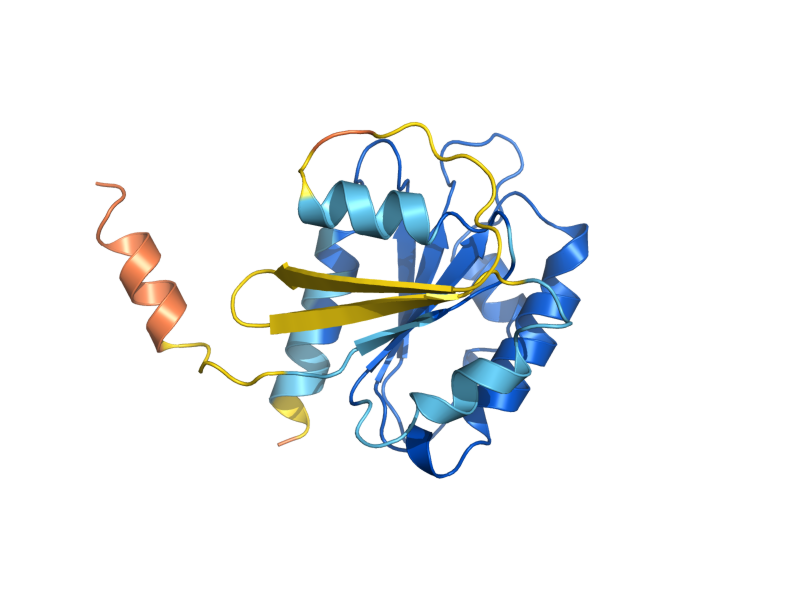
Basic sequence-derived (length, molecular weight, isoelectric point) and experimentally-determined (median abundance, median absolute deviation) protein information. Click "Protein Details" for further information about the protein such as half-life, abundance, domains, domains shared with other proteins, protein sequence retrieval for various strains, physico-chemical properties, protein modification sites, and external identifiers for the protein.
Alleles
Curated mutant alleles for the specified gene, listed alphabetically. Click on the allele name to open the allele page. Click "SGD search" to view all alleles in search results.
View all ARF1 alleles in SGD search
Gene Ontology
GO Annotations consist of four mandatory components: a gene product, a term from one of the three Gene Ontology (GO) controlled vocabularies (Molecular Function, Biological Process, and Cellular Component), a reference, and an evidence code. SGD has manually curated and high-throughput GO Annotations, both derived from the literature, as well as computational, or predicted, annotations. Click "Gene Ontology Details" to view all GO information and evidence for this locus as well as biological processes it shares with other genes.
- Summary
- GTPase that acts as ADP ribosylation factor (ARF); involved regulation of vesicle formation in ER to Golgi and Golgi to plasma membrane vesicular transport, and in macroautophagy; localizes in Golgi
View computational annotations
Molecular Function
- Manually Curated
- enables GTPase activity (IDA)
Biological Process
- Manually Curated
- involved in endoplasmic reticulum to Golgi vesicle-mediated transport (IDA)
- involved in Golgi to plasma membrane transport (IPI, IGI)
- involved in macroautophagy (IMP)
- acts upstream of or within positive regulation of mitochondrial fission (IGI)
- acts upstream of or within positive regulation of mitochondrial fusion (IGI)
- involved in protein localization to Golgi membrane (IDA)
- acts upstream of or within regulation of fatty acid metabolic process (IGI)
- involved in regulation of Golgi organization (IDA)
Cellular Component
- Manually Curated
- is active in Golgi apparatus (IDA)
- is active in organelle membrane contact site (IDA)
- High-Throughput
- located in cytosol (HDA)
- located in Golgi apparatus (HDA)
Phenotype
Phenotype annotations for a gene are curated single mutant phenotypes that require an observable (e.g., "cell shape"), a qualifier (e.g., "abnormal"), a mutant type (e.g., null), strain background, and a reference. In addition, annotations are classified as classical genetics or high-throughput (e.g., large scale survey, systematic mutation set). Whenever possible, allele information and additional details are provided. Click "Phenotype Details" to view all phenotype annotations and evidence for this locus as well as phenotypes it shares with other genes.
- Summary
- Non-essential gene in reference strain S288C; null mutant is temperature sensitive for growth, is a myo-inositol auxotroph, and displays decreased competitive fitness and growth rate; null mutant has protein processing/trafficking defects, and displays decreased replicative and chronological lifespans, survival rate in stationary phase, mitophagy, desiccation resistance and shortened telomeres; overexpression results in a G2 or M phase delay
Classical Genetics
- null
- cell death: decreased
- chitin deposition: increased
- Golgi morphology: abnormal
- protein secretion: abnormal
- protein secretion: decreased
- protein/peptide accumulation: increased
- protein/peptide distribution: abnormal
- protein/peptide modification: decreased
- replicative lifespan: decreased
- resistance to chemicals: decreased
- survival rate in stationary phase: decreased
- vacuolar morphology: abnormal
- overexpression
- null
- auxotrophy
- chemical compound accumulation: abnormal
- chemical compound accumulation: decreased
- chemical compound accumulation: increased
- chronological lifespan: decreased
- competitive fitness: decreased
- desiccation resistance: decreased
- endoplasmic reticulum morphology: abnormal
- heat sensitivity: increased
- metal resistance: decreased
- mitophagy: decreased
- protein/peptide modification: decreased
- resistance to chemicals: decreased
- resistance to chemicals: increased
- respiratory growth: absent
- respiratory growth: increased rate
- telomere length: decreased
- vegetative growth: decreased rate
- viable
- overexpression
Large-scale Survey
Interaction
Interaction annotations are curated by BioGRID and include physical or genetic interactions observed between at least two genes. An interaction annotation is composed of the interaction type, name of the interactor, assay type (e.g., Two-Hybrid), annotation type (e.g., manual or high-throughput), and a reference, as well as other experimental details. Click "Interaction Details" to view all interaction annotations and evidence for this locus, including an interaction visualization.
Regulation
The number of putative Regulators (genes that regulate it) and Targets (genes it regulates) for the given locus, based on experimental evidence. This evidence includes data generated through high-throughput techniques. Click "Regulation Details" to view all regulation annotations, shared GO enrichment among regulation Targets, and a regulator/target diagram for the locus.
- Summary
- ARF1 encodes a small GTPase of the Ras superfamily that acts as an ADP ribosylation factor with a critical role in control of membrane traffic. ARF1 has a paralog, ARF2, that appears to be functionally interchangeable with ARF1. The activity of Arf1p or Arf2p (ARF) is essential to initiate the formation of COPI vesicles at the Golgi membrane that carry out retrograde transport between the Golgi and the endoplasmic reticulum, and within the Golgi compartments. ARF exists in an inactive GDP-bound form in the cytosol and an active GTP-bound form associated with the membranes. The exchange of GDP for GTP on ARF is catalyzed by guanine nucleotide exchange factors (GEFs) Sec7p, Gea1p, Gea2p, and Syt1p. Activation of ARF triggers a conformational change that exposes its N-terminal domain to be inserted into membranes. Membrane-bound GTP-ARF then stimulates the recruitment of COPI coat proteins (Cop1p, Ret2p, Ret3p, Sec21p, Sec26p, Sec27p) and formation of the COPI vesicle. The subsequent steps of vesicle budding and delivery to its target membrane require inactivation of ARF, i.e. hydrolysis of ARF-bound GTP. Since ARF has very little intrinsic GTPase activity, this step depends on GTPase-activating proteins (GAPs) Gcs1p and Glo3p. The precise mechanisms that control GEFs and GAPs functions and thereby impact ARF activity remain to be elucidated. The entire control system is highly conserved throughout evolution and human ARF genes (ARF1, ARF4, ARF5, or ARF6) can complement inactivation of ARF1 and ARF2 genes in yeast.
Expression
Expression data are derived from records contained in the Gene Expression Omnibus (GEO), and are first log2 transformed and normalized. Referenced datasets may contain one or more condition(s), and as a result there may be a greater number of conditions than datasets represented in a single clickable histogram bar. The histogram division at 0.0 separates the down-regulated (green) conditions and datasets from those that are up-regulated (red). Click "Expression Details" to view all expression annotations and details for this locus, including a visualization of genes that share a similar expression pattern.
Summary Paragraph
A summary of the locus, written by SGD Biocurators following a thorough review of the literature. Links to gene names and curated GO terms are included within the Summary Paragraphs.
Last Updated: 1999-10-28
All Curated Literature
All manually curated literature for the specified gene, shown as a count of references by year of publication followed by the most recent papers. Click "Literature Details" or "See all" to view all literature information for this locus, organized into topics according to their relevance to the gene (Primary Literature, Additional Literature, or Review).
Loading literature…